
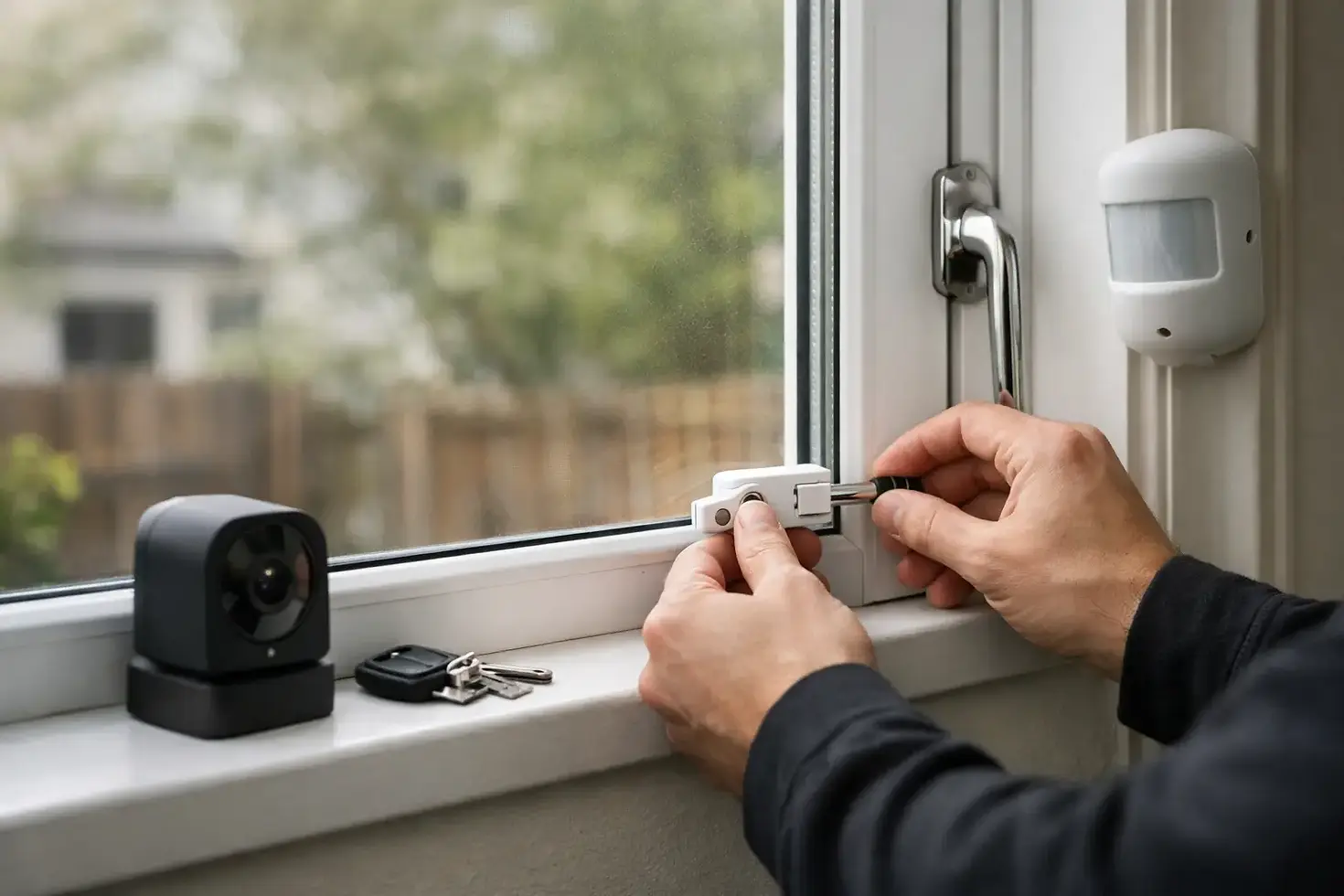
How to Improve Window Security in Your Home

A window left slightly open behind a curtain can look like an easy opportunity from outside. So can a worn handle, a loose frame or an old ground-floor window that no longer shuts tightly. Knowing how to improve window security starts with looking at your home as someone trying to get in would: which windows are easiest to reach, least visible and most likely to give way?
Security is not just about fitting a lock and hoping for the best. It is the combined strength of the frame, glass, hardware, fitting and the everyday habits of the people living in the property. The good news is that most homes can be made noticeably more secure without turning them into a fortress.
Start with the windows that present the greatest risk
Ground-floor windows, side-facing windows, rear extensions and first-floor windows above a flat roof or porch usually deserve attention first. They can be less visible from the road, easier to reach and more likely to be left open for ventilation.
Walk around the outside of your property in daylight, then again after dark. Look for overgrown shrubs that give someone cover, bins or garden furniture that could be used for access, and windows hidden from neighbours' view. Improving security may be as simple as moving a wheelie bin, trimming back dense planting or fitting external lighting near a vulnerable side passage.
Inside, test each window honestly. Does it close fully without force? Does the handle feel loose? Can you see gaps between the sash and frame? A window that does not engage properly with its locking points is not providing the protection it was designed to offer. Small faults are worth dealing with promptly, particularly before they become a reason to force the window shut and damage the mechanism further.
How to improve window security with better locks
Modern uPVC and aluminium windows commonly use multi-point locking systems. When the handle is lifted and the key is turned, locking points engage around the frame rather than relying on one central catch. This spreads resistance across the window and makes forcing it open far more difficult than with older hardware.
For casement windows, key-locking handles are a sensible first check. Keep keys out of reach and away from the window itself, especially where a burglar could break a small pane and reach through. Avoid leaving keys permanently in locks on accessible windows, but make sure household members know where they are kept in an emergency.
Sash windows need an approach suited to their design. Locking fasteners, sash stops and restrictors can prevent the sashes from being opened beyond a set point. These are useful where you want ventilation without leaving a wide opening. The right option depends on whether the window is timber, uPVC or aluminium, and whether it is a traditional sliding sash or a tilt-and-turn design.
If a handle turns but the window will not lock, do not assume that replacing the handle will solve the problem. The gearbox, espagnolette strip, hinges or alignment may be at fault. A professional inspection can identify whether a repair is suitable or whether the window has reached the point where replacement is the more reliable long-term choice.
Choose glazing that resists forced entry
The glass itself is a major part of window security. Standard double glazing is often a substantial improvement on old single panes, but security performance varies according to the glass specification and how the unit is fitted into the frame.
Toughened safety glass is designed to break into small granular pieces, making it a good choice for locations where impact safety is a priority. Laminated glass uses an interlayer that helps hold the pane together when broken. That extra resistance can delay entry and reduce the chance of a clean opening being made through the glass.
Laminated glass is particularly worth discussing for ground-floor windows, rear doors with glazed sections, secluded elevations and properties where security is a chief concern. It is not automatically necessary for every window. Higher-specification glass costs more, and the best choice should balance risk, budget, energy performance and the character of the property.
Do not overlook the glazing bead either. On many modern windows, internal beading means the glass cannot be removed from outside without first opening the window. This is a useful design feature, but it only performs as intended when the whole window is correctly manufactured and installed.
Make sure frames, hinges and fitting are doing their job
A strong lock cannot compensate for a poor frame or careless installation. Frames should be securely fixed to the opening, properly packed and finished so they remain stable over time. If a frame is loose, visibly bowed or pulling away from surrounding brickwork, it needs attention.
Hinges are another commonly missed weak point. On outward-opening casement windows, hinge guards and good-quality hinges help prevent the sash from being forced away from the frame on the hinged side. Older windows may have worn friction stays that allow the sash to move more than it should. This can affect both security and weather sealing.
For replacement windows, ask how the security features work together rather than focusing on a single headline feature. A quality installation should include suitable locking hardware, reinforced areas where needed, secure glazing and accurate adjustment on completion. It should also close smoothly. A window that needs a shoulder against it to lock is unlikely to stay correctly aligned for long.
Whitefield Windows provides tailored advice for homeowners across Greater Manchester, helping match window specifications to the property rather than pushing a one-size-fits-all upgrade.
Use restrictors without compromising fire safety
Window restrictors are valuable on ground-floor windows, children's bedrooms and rooms that need regular ventilation. They limit how far a window can open, often while still allowing enough airflow for day-to-day use. Some restrictors can be released with a key or designed to allow a wider opening when required.
That said, security must not interfere with escape in an emergency. Windows that may be needed as a means of escape should remain usable by occupants, and everyone in the household should understand how to open them. The right arrangement depends on the layout of the home, who lives there and which exits are available. If you are unsure, ask an experienced installer to assess the practical use of each window rather than fitting the same restrictor everywhere.
Improve the security around the window
Windows are most vulnerable when they are easy to approach unnoticed. Simple measures around the property can make a meaningful difference. External lighting with a sensor can reduce dark approach routes, while a maintained garden improves sightlines from the house and neighbouring properties.
Blinds and curtains should provide privacy without advertising an empty home. If you are away, avoid leaving valuable items on display close to windows. Consider how a laptop, jewellery box or car keys might be visible from the pavement or garden. The aim is not to make your home look heavily defended, but to avoid making it look easy.
For landlords, regular inspections are especially useful. Tenants may not report a stiff handle or failed lock immediately, yet a quick repair can prevent a more serious security issue. Record checks of accessible windows between tenancies and deal with damaged glazing or faulty mechanisms without delay.
Do not forget everyday window habits
The most secure window still needs to be locked. Build a quick check into your evening routine: close and lock accessible windows, remove keys, and make sure no opening is left wide enough to reach through. Take particular care with bathrooms, utility rooms and small side windows, which are often overlooked.
Be cautious with trickle ventilation and night-latch positions. These can be useful for fresh air, but only if the window remains secured in the intended restricted position. Never improvise with a partially closed window and a loose object holding it in place.
If a lock sticks, a handle becomes difficult to turn or condensation appears between panes, arrange an inspection rather than waiting. Security and weather performance often decline together, and early maintenance is usually simpler than an emergency repair.
A secure home should still feel like a comfortable, light-filled place to live. Begin with the window that concerns you most, get the fault or weakness properly assessed, and make each improvement count for the years ahead.

Comments