
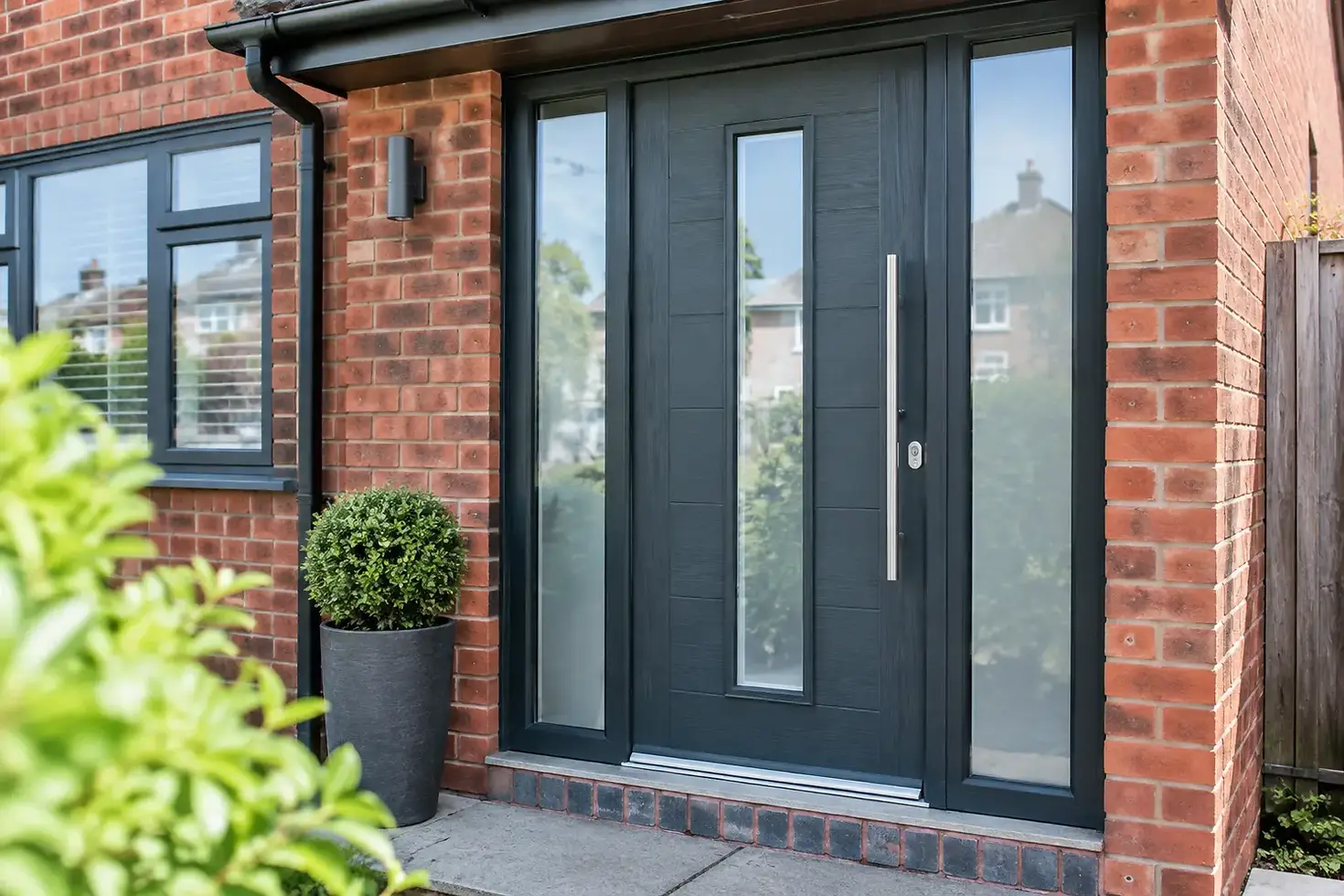
Will My New Composite Door Come With the Frame?

A front door can look like a simple purchase until the quotation arrives and the details start to matter. Will my new composite door come with the frame? In most cases, when you choose a professionally supplied and fitted composite door, the answer is yes: it is quoted as a complete doorset, including a new frame. However, it is always worth checking exactly what is included before you place an order.
A composite door and its frame need to work together for security, weather resistance, smooth operation and a neat finish. Reusing an existing frame is sometimes possible, but it is not automatically the right choice.
Does a new composite door normally include a frame?
For a replacement installation, a composite door is usually supplied with a purpose-made frame, hinges, locking system, threshold and weather seals. The door slab, frame and hardware are selected to fit together correctly, then made to the sizes confirmed at survey.
This is generally the most dependable option. A new frame allows the installer to remove tired, warped or damaged materials around the opening and fit a complete system that closes, locks and seals as intended.
That said, quotations are not all written in the same way. Some may list the door and frame separately, while others may refer simply to a “composite door set” or “supply and fit”. Ask the installer to confirm the scope in plain language, particularly if you are comparing more than one quote.
Why replacing the frame is often the better choice
Your existing frame may look acceptable from inside, but it can still have issues that affect the new door. Older timber frames can twist, soften through moisture exposure or lose their square shape over time. Existing uPVC frames may be discoloured, cracked, poorly fixed or not designed for the weight and hinge positions of a modern composite door.
A new frame gives the installation team a clean starting point. It helps them set the door squarely, achieve even gaps around the sash and fit the locking keeps in the right position. Those details matter. A well-made composite door cannot perform at its best if it is fitted into a frame that has moved or deteriorated.
There is an appearance benefit too. A new frame gives a consistent colour and finish around the entrance. This is especially noticeable if you are choosing a coloured door, a woodgrain effect, sidelights or decorative glazing. Keeping a faded white frame beside a new anthracite grey or black door can make the whole entrance look unfinished.
When can an existing door frame be retained?
There are occasions where a new composite door may be fitted into a sound existing frame, but this tends to be the exception rather than the standard replacement route. The frame must be structurally sound, correctly sized, square and compatible with the chosen door and its hardware.
For example, a homeowner may have a relatively recent frame that is in excellent condition but needs a replacement door following damage. Even then, an installer should inspect the frame rather than make an assumption from photographs alone. Measurements, hinge positions, locking arrangements and the condition of the surrounding brickwork all need checking.
Retaining a frame can reduce the amount of work involved, but it may limit your choice of door style, glazing layout or security specification. It can also leave you with older seals and components around a brand-new door. Honest advice at survey stage is more useful than choosing the lowest initial figure and finding compromises later.
What should be included with a composite door frame?
A full fitted composite door quotation should make clear what is being supplied, removed and finished. As well as the door and frame, this commonly includes a threshold, hinges, locking cylinder, multi-point locking mechanism, handle set and weather seals.
Depending on the design, it may also include glazed panels, sidelights, a letterplate, door knocker, spyhole and decorative glass. If you have chosen a particular handle colour or upgraded cylinder, make sure that detail is written down. Small choices have a noticeable effect on the finished entrance.
The fitting work should also cover removal of the old door and frame, installation of the replacement, secure fixing, insulation around the perimeter where needed, internal and external finishing, and disposal of the old materials. Ask how trims, render, brickwork or existing internal plaster will be treated if the old frame is wider or deeper than the new one.
The threshold matters as much as the frame
Thresholds are often overlooked when people focus on the colour and glass design, but they have a practical job. They form the lower part of the entrance, helping the door close correctly while managing rainwater and reducing draughts.
The right threshold depends on the property, the floor level inside and outside, and whether there is an existing step. If you are replacing a door at a rental property, or want easier access for a pushchair or reduced mobility, raise this during the survey. It is far easier to choose the right arrangement before the door is manufactured than after fitting day.
Why a survey is essential before ordering
Composite doors are made to suit the opening, not lifted from a shelf in a standard size. A proper survey checks the width, height, reveals, sill, surrounding walls and whether the opening is level and square. It also identifies hidden issues such as loose brickwork, damaged lintels or a failed old frame.
This is when you should discuss how you use the entrance. Perhaps you want more privacy from patterned glass, a wider clear opening, a low threshold, or a colour that complements your windows. If your home has an older porch or a narrow hallway, those details can affect the best frame size and opening direction.
For properties across Whitefield, Bury, Prestwich and the wider Greater Manchester area, it is common to find entrances that have been altered over several decades. A careful survey prevents surprises and allows the quote to reflect the work actually required.
Questions to ask before accepting a quote
You do not need technical knowledge to compare composite door quotations well. Ask whether the price includes a complete new frame, removal and disposal of the old door, glazing, the chosen furniture, finishing work and VAT. Confirm whether any remedial work to the opening would be extra if uncovered during installation.
It is also sensible to ask what security hardware is included, what colour is specified for both sides of the frame, and whether the quote accounts for any side panels or top lights. If a detail matters to you, from the letterplate finish to the obscurity of the glass, have it stated on the order.
A very low quote can sometimes reflect a narrower scope rather than a like-for-like product. Comparing the written specification, not just the total, is the fairest way to judge value.
A new frame can protect your investment
A composite front door is chosen for its solid feel, security, insulation and kerb appeal. Pairing it with a new, correctly fitted frame helps protect all of those benefits. It can improve the seal against Manchester weather, provide a cleaner finish and avoid fitting a new door around older components that may soon need attention.
Whitefield Windows & Doors provides straightforward advice on composite door replacements, including what is included in the fitting work and any preparation needed around your opening. As a CERTASS-registered local installer, the team can explain the options clearly, with transparent pricing, deposit protection and insurance-backed guarantees where applicable.
If you are weighing up a new composite door, do not rely on assumptions about the frame. Request a free tailored quotation and ask for every part of the supply-and-fit package to be set out clearly, so you can choose a door that looks right and works properly for years to come.


Comments