

When Should You Choose Replacement Windows?

A window that whistles on a windy night, gathers condensation every morning or leaves a room noticeably cold is doing more than causing an inconvenience. It is affecting comfort, energy use and, in some cases, home security. Replacement windows give homeowners a practical opportunity to resolve those problems while improving the appearance and value of the property.
The right time to replace windows is not always obvious. Some older frames can be repaired, and a failed glass unit does not automatically mean the whole window needs replacing. However, when faults are repeated, performance has dropped or the windows no longer suit the way your home looks and functions, a full replacement is often the better long-term decision.
Signs Your Windows Need Replacing
Draughts are one of the clearest warning signs. You should not feel cold air around a closed window, particularly if the heating is on and the room still struggles to stay warm. Worn seals, warped frames and poor-fitting openers can all allow heat to escape, making your boiler work harder through a Greater Manchester winter.
Condensation between panes is another common issue. This usually means the sealed unit has failed and moisture has entered the gap between the glass. The window may still close, but its insulating performance will be reduced and the misting will not clear by itself. If the frames are otherwise sound, replacing the glazing unit may be possible. If there are also problems with locks, hinges, drainage or frame condition, replacing the complete window can provide better value.
Look closely at how each window operates. Stiff handles, loose hinges, locks that need force and windows that will not close squarely should not be ignored. Aside from daily frustration, these faults can weaken security and create gaps around the sash. Timber frames with rot, cracked uPVC, discoloured surfaces and persistent mould around reveals are also signs that a more lasting upgrade is worth considering.
What Good Replacement Windows Should Deliver
A new window should do more than look tidy from the pavement. It should make the home easier to heat, more secure and more comfortable to live in. The best specification will depend on the property, the existing openings and your priorities, but thermal efficiency, security and fitting quality should sit at the centre of the decision.
Modern double glazing uses sealed glass units and low-emissivity coatings to keep more warmth inside. Triple glazing can offer further insulation and can be particularly worthwhile in exposed locations, larger openings or homes where reducing heat loss is the main priority. It is not automatically the right answer for every property, though. Triple-glazed units are heavier and can cost more, so the expected benefit should be considered alongside the window style, frame material and budget.
Security is equally important. A properly specified window should have strong locking points, secure hinges and toughened glass where required. Just as importantly, it must be installed accurately. Even a high-quality frame will not perform as intended if it is poorly packed, fixed or sealed into the opening.
Noise reduction may also be a deciding factor for homes near busy roads, schools or town centres. Standard modern double glazing can reduce outside noise compared with old single glazing or worn units. In some situations, a specialist acoustic glass specification may be more appropriate. The key is to discuss the source of the noise rather than simply assuming that thicker glass will solve every problem.
Choosing Between uPVC and Aluminium Frames
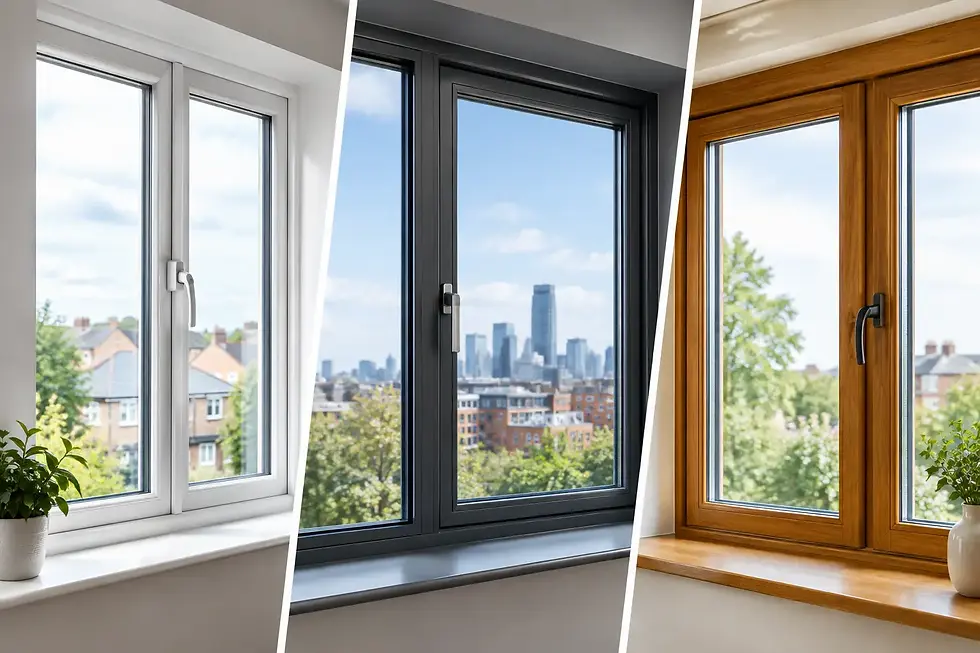
uPVC remains a popular choice for replacement windows because it offers strong thermal performance, low maintenance and excellent value. It suits many homes across the North West, from modern estates to traditional semis, and is available in a wide choice of colours, finishes and styles. A quality uPVC window should feel solid, close cleanly and retain its appearance without needing regular painting.
Aluminium windows have a slimmer, more contemporary profile and can be an excellent option where you want to maximise glass area or create a sharper architectural finish. They are particularly well suited to larger openings and modern extensions, although they can also complement period homes when chosen carefully. Aluminium generally carries a higher upfront cost than uPVC, so it makes most sense where its appearance, strength or slim sightlines add genuine value to the project.
Colour matters too. White frames remain a clean, classic choice, while anthracite grey, black and wood-effect finishes can transform the character of a property. A bold colour can look striking, but consider the roofline, brickwork, doors and neighbouring window styles before making a final decision. Replacement windows should enhance the whole elevation, not compete with it.
Match the Style to Your Home
Casement windows are a versatile option for many properties. They provide effective ventilation, suit a broad range of designs and can be configured with fixed and opening sections to suit each room. Tilt and turn windows are useful where controlled ventilation and easy cleaning are priorities, particularly on upper floors. Sliding sash windows can preserve the character of older homes while offering the convenience and efficiency of modern glazing.
The layout of the window is as important as the frame itself. For example, a large fixed pane may bring more daylight into a lounge, but it will not provide ventilation. An opening sash in the right place can make a bedroom or kitchen much more practical. Consider furniture placement, escape routes, privacy and how you will clean external glass before agreeing the design.
If you are replacing windows as part of a wider renovation, it is worth thinking about doors, conservatories and roofline details at the same time. Matching sightlines, colours and hardware creates a more considered result, and planning the work together can avoid unnecessary disruption later.
Why Installation Matters as Much as the Product
Homeowners often compare frame colours and glass options but give less attention to the installation process. This is where a local, experienced installer can make a meaningful difference. Every opening is slightly different, especially in older properties, so a careful survey is essential before any order is placed.
A professional fitting should include safe removal of the old windows, checks to the opening, accurate positioning of the new frames and suitable sealing both inside and out. Internal trims, external finish and making good should be discussed clearly before work begins. There should be no uncertainty about what is included in the quotation, what could affect the price and how the home will be protected during installation.
Ask about guarantees, deposit protection and insurance cover as part of your decision. These are not minor details. Windows are a significant investment, and clear protections provide confidence that the work and the customer are properly looked after. Reviews can also be useful, particularly when they mention communication, cleanliness, punctuality and how issues were handled rather than simply the finished appearance.
Getting a Fair Quote for Replacement Windows
A trustworthy quotation should be tailored to your property rather than based on a rushed guess. The price can vary according to the number and size of windows, frame material, glazing choice, opening style, access requirements and any repairs needed around the openings. Larger bay windows, unusual shapes and upper-floor installations may require more time and specialist planning.
Cheapest is not always best. A low initial figure can conceal lower-grade hardware, limited guarantees, poor finishing or extras added later. Equally, the most expensive quote is not automatically the best specification for your needs. Ask for a clear breakdown of what is being supplied and fitted, then compare like for like.
Honest advice should also include occasions when full replacement is unnecessary. If a frame is in good order and the issue is limited to a misted glass unit, damaged handle or failed hinge, a repair may be the sensible route. The right recommendation is the one that resolves the problem properly, not the one that adds work for its own sake.
For homeowners in Whitefield, Bury, Manchester and surrounding areas, choosing an installer with local knowledge can make the process more straightforward. Whitefield Windows takes a tailored approach, with transparent quotations, professional installation and practical protection for your investment. The aim is simple: windows that suit your home, perform properly and give you confidence every time you close the door behind you.


Comments