

How to Choose Patio Doors for Your Manchester Home

A patio door can change far more than the route from your kitchen to the garden. It affects how much light reaches the room, how warm the space feels in winter, how secure your home is and whether daily life flows easily outside. Knowing how to choose patio doors means looking beyond the showroom view and choosing a design that suits your property, habits and budget for years to come.
For homes across Greater Manchester, the right choice also needs to stand up to wet weather, busy family life and rising energy costs. A good patio door should feel smooth to use, close firmly, keep draughts at bay and give you confidence when you lock up at night.
Start with how you want to use the opening
The best door style is usually dictated by the room and the way you use it. Before comparing frames, colours and glass options, stand inside the room and consider the opening itself. How wide is it? Where does the furniture sit? Do you need a clear route for children, pets, garden furniture or entertaining?
A standard sliding patio door is an excellent choice where space is tight. The panels glide along a track rather than swinging into the room or garden, so they do not take up valuable floor space. They offer large glass areas and a clear view outside, making them particularly useful in kitchens, dining rooms and conservatories.
French doors create a more traditional appearance and give you the option to open one leaf for everyday access or both for a wider opening. They work well on smaller apertures and suit period homes, though you need to allow room for the doors to swing.
Bifold doors can fold back to open a large section of wall, creating an impressive connection between house and garden. They are often chosen for extensions and larger renovations. The trade-off is that, when closed, there are more frame lines than with a sliding door, and the stacked panels need space at one or both sides when open.
There is no single winner. If your priority is uninterrupted garden views and a practical, space-saving design, sliding patio doors often make most sense. If you want a wide-open entertaining space, bifolds may be worth the additional investment.
How to choose patio doors by material
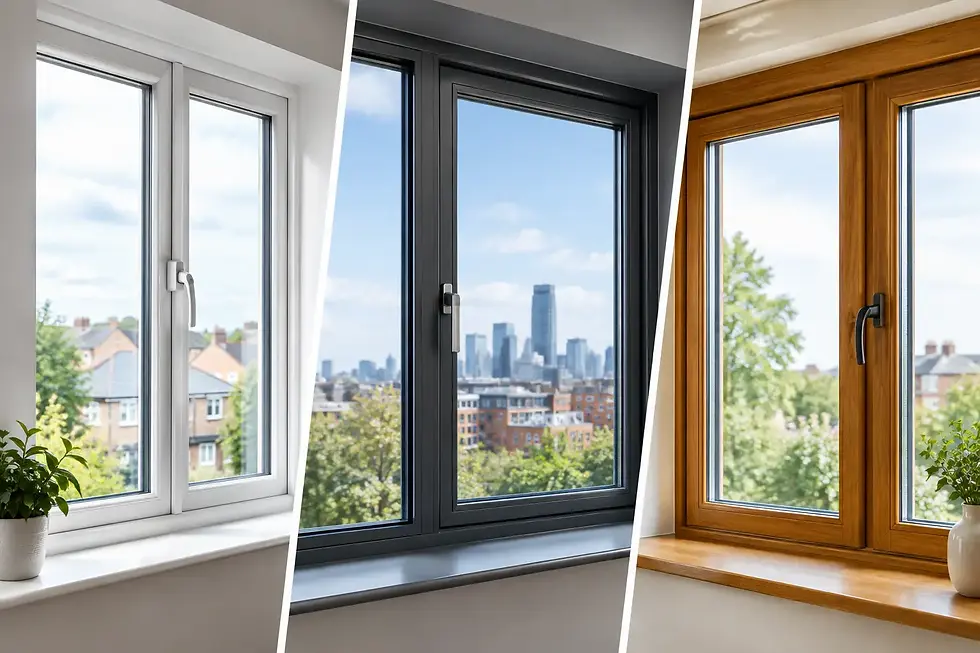
The frame material has a direct effect on appearance, thermal performance, maintenance and price. The three common options each have a place.
uPVC patio doors
uPVC remains a popular choice because it is cost-effective, low maintenance and thermally efficient. Modern uPVC frames are available in far more finishes than the plain white designs many people remember, including anthracite grey, black, cream and realistic woodgrain effects.
For many homes, a quality uPVC sliding door offers a sensible balance of performance and value. Look for a well-made system with reinforced sections, strong weather seals and a smooth-running track. Very cheap frames can feel less substantial over time, particularly on larger door openings.
Aluminium patio doors
Aluminium is strong, slim and well suited to wide glass panels. Its narrower frames can let in more daylight and give a clean, contemporary finish, especially on modern extensions. Quality aluminium systems use thermal breaks within the frame to reduce heat transfer, so they can achieve very good energy performance.
Aluminium normally costs more than uPVC, but its strength makes it a strong option for larger spans and homeowners who want a refined, architectural look. It is also durable and requires very little upkeep beyond occasional cleaning and care of the tracks.
Timber-effect finishes and matching details
If your property has a traditional character, the finish matters as much as the material. A woodgrain uPVC finish or carefully selected aluminium colour can complement existing windows, a composite front door and interior décor without the maintenance demands of natural timber.
Try not to choose frame colour in isolation. View samples in natural light and think about the brickwork, roofline, kitchen finishes and neighbouring windows. A colour that looks striking on a small swatch may feel very different across a large glazed opening.
Prioritise warmth as well as the view
Large areas of glass should not mean a cold room. Modern double glazing can provide excellent insulation, while triple glazing may be worthwhile where maximum thermal performance or noise reduction is a priority. The right specification depends on the door system, the orientation of the room and your wider budget.
Ask about the overall thermal performance of the complete door, not just the centre pane of the glass. Frames, spacers, seals and installation all contribute to how well the finished door retains heat. A well-fitted double-glazed door can be a substantial improvement on an older, draughty unit, while a poorly fitted premium door will never perform as it should.
South- and west-facing rooms bring another consideration: solar gain. Large panes can make a room wonderfully bright, but they can also increase glare and heat on sunny days. Solar-control glass may be useful in some situations, particularly in extensions with extensive glazing. It can slightly alter the appearance of the glass, so it is worth discussing whether the benefit justifies it for your home.
Do not compromise on security
A patio door is a main access point to the property, so the locking system deserves close attention. Look for multi-point locking, secure handles, toughened safety glass where required and a frame that is designed to resist forced entry. Sliding doors should have anti-lift features that help prevent panels being lifted from their tracks.
Security is not only about the product specification. Accurate measuring and professional fitting are essential to ensure locks engage correctly, panels align properly and the door closes tightly. A door that catches, drags or needs force to lock should be addressed rather than accepted as normal.
For extra reassurance, ask what guarantees and protections are included with your installation. Clear paperwork, deposit protection, full insurance and an insurance-backed guarantee can provide valuable confidence on a significant home improvement project.
Think about thresholds, access and everyday details
The threshold is easy to overlook until the doors are installed. A low threshold can make access easier for pushchairs, wheelchairs and anyone wanting a smoother route to the patio. However, the detail must still manage rainwater effectively, particularly on exposed elevations. Your installer should assess external levels and drainage before recommending the most suitable option.
Also consider which panel opens and where it will sit. With a sliding door, an opening panel on the wrong side can be frustrating every day. With French doors, decide whether you want a primary traffic door and whether the handles will clash with furniture or blinds.
Integrated blinds, fitted within the glazed unit, can be a neat solution for some homes. They reduce cleaning and avoid cords, but they add cost and are not necessary for every room. Conventional curtains, blinds or external shading may offer more flexibility if you expect to change your décor regularly.
Choose glass that suits the location
Clear glass is the default choice for a garden-facing door, but privacy and safety may call for a different approach. Obscure or patterned glass can be useful where a patio overlooks another property. Laminated glass can add an extra level of security and may help reduce certain types of noise. Toughened glass is commonly required in critical locations, including low-level glazing, because it is designed to break more safely if damaged.
If your home is near a busy road, railway line or active neighbourhood route, acoustic glazing may be worth discussing. It is not a cure for every sound issue, as walls, vents and adjoining windows also affect noise levels, but the right glass specification can make a noticeable difference in the right setting.
Compare quotations on more than the headline price
When you are comparing patio door quotations, make sure they describe the same job. One price may include a higher-performing glass unit, better hardware, internal trims, disposal of the old doors and making good around the opening, while another may not. The lowest initial figure is not always the best value.
A transparent quotation should set out the door style, frame material and finish, glazing specification, hardware, installation work, timescale and guarantee. It should also explain whether any building work, plastering, electrics or alterations to the opening are required. Honest advice at this stage prevents unwelcome costs later.
It is sensible to see examples of the door system in person if possible. Open and close it several times. Check the handles, locks, sightlines and running action. Photographs are useful, but they cannot tell you whether a door feels solid and easy to operate.
Make the final decision with the whole home in mind
The most successful patio door choices look as though they belong to the property. They match the scale of the room, complement nearby windows and make the garden easier to enjoy without making the house harder to heat or secure. For a modest kitchen opening, that may mean a dependable uPVC slider. For a large rear extension, it may mean slim aluminium doors with carefully specified glazing.
Whitefield Windows can help homeowners assess the opening, compare practical options and receive a tailored quotation with no hidden costs. A measured recommendation from an experienced local installer is often the difference between a door that merely looks good on day one and one that continues to perform through every season.


Comments