
Guide to Replacement Window Costs in 2026

A new window should make your home warmer, quieter and more secure. It should not leave you guessing where the money has gone. This guide to replacement window costs explains the practical factors behind a quotation, so you can compare like for like and choose an installation that represents genuine long-term value.
For homeowners across Greater Manchester, the right price is rarely simply the lowest figure. Window replacements are made to measure, and the quality of the frame, glass, locks, installation and aftercare all affect how the finished job performs for years to come.
What do replacement windows typically cost?
As a broad guide, a standard white uPVC casement window supplied and fitted will often fall between £500 and £900. Larger openings, coloured finishes, trickle vents, decorative glass and more complex installation can increase that figure.
Aluminium windows commonly cost more, often from around £900 to £1,500 or more per window, because of the material, slimmer sightlines and manufacturing involved. Vertical sliding sash windows are also usually more expensive than a straightforward casement design, with many installations starting around £900 and rising with size, finish and specification.
These are useful starting points, not fixed prices. A small ground-floor bathroom window is very different from a wide first-floor bedroom window or a feature bay. The most reliable way to budget is to request a written, itemised quotation based on a survey of your property.
The main factors affecting replacement window costs
Frame material and window style
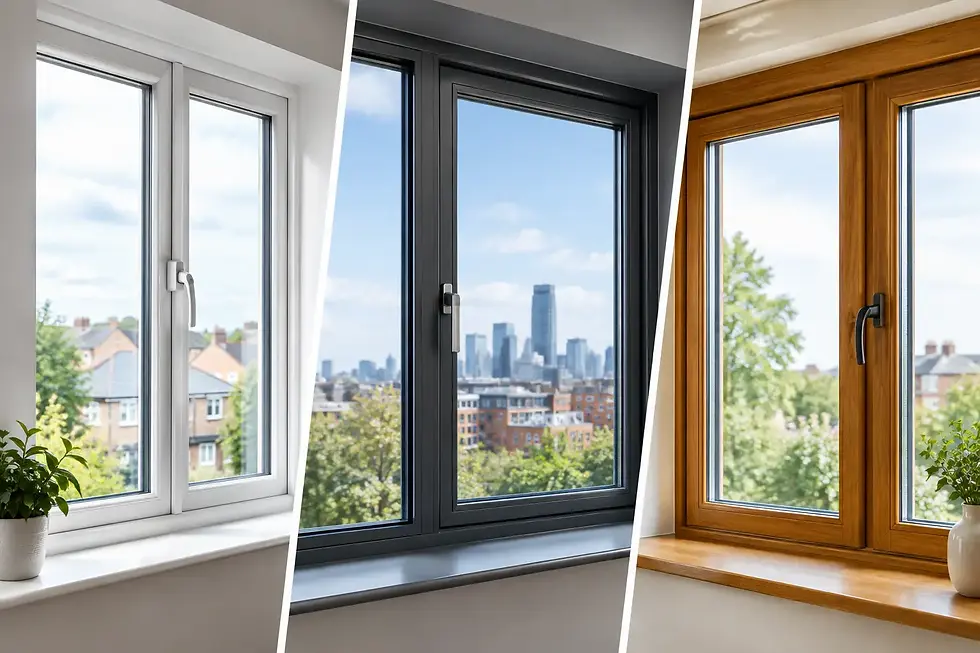
uPVC remains a popular choice because it offers strong thermal performance, low maintenance and excellent value. It is available in more colours and woodgrain finishes than many people expect, although premium foils and non-standard colours generally cost more than plain white.
Aluminium suits homeowners who want a contemporary appearance and narrow frames that allow more natural light into the room. It can be particularly effective for larger window openings, extensions and modern renovations, but its higher initial price needs to be allowed for.
The style matters too. A simple fixed pane is generally less costly than an opening casement, while sash, tilt-and-turn, bay and shaped windows require more components, fabrication and fitting time. There is no universally best option - the right choice depends on the property, the room and how you use it.
Size, configuration and number of openings
Window pricing is based partly on the amount of material and glass required. A larger window will usually cost more, but configuration can be just as significant. Two opening sashes, integral blinds, Georgian bars or several separate sections can add to the cost compared with a single, fixed unit.
Replacing several windows at once may reduce the cost per unit because surveying, delivery and installation time can be planned more efficiently. That does not mean every window should be replaced before it needs to be. A good installer will talk honestly about your priorities, whether that is a full-house upgrade or tackling the coldest and least secure windows first.
Double glazing or triple glazing
Modern double glazing is a substantial improvement on older units and is suitable for many homes. Triple glazing adds another pane and can improve thermal performance and reduce external noise, particularly when combined with the right glass specification.
It also adds weight and cost. Depending on the window size and system, triple glazing may add roughly £100 to £250 or more per window. It can be an excellent investment for some properties, but it is worth considering the whole window specification rather than choosing it on the basis of pane count alone. Frame performance, installation quality and the condition of surrounding walls all influence real-world comfort.
Glass specification and finishing details
The glass in your windows does much more than keep the weather out. You may need obscure glazing for privacy, laminated glass for added security, acoustic glass near a busy road, or solar-control glass for a south-facing room or conservatory.
These options can increase the price, as can leaded designs, decorative patterns, Georgian bars and warm-edge spacer bars. They are not unnecessary extras when they solve a genuine problem. The key is to specify them where they will make a noticeable difference, rather than paying for features that do not suit the room.
Access and installation work
Fitting costs vary with access. Ground-floor replacements are usually more straightforward than upper-floor work requiring safe access equipment. Restricted driveways, parking arrangements, conservation considerations and difficult openings can also affect labour time.
Some properties need additional work once old frames are removed. This may include repairing damaged brickwork, renewing timber reveals, making good internal plaster or replacing external sills. A careful survey helps identify likely requirements in advance, although concealed issues are not always visible until the existing window is taken out.
Ask whether the quotation includes removal and responsible disposal of your old windows, trims, sealants, making good and a final clean-down. Transparent pricing should make clear what is included and what could be treated as additional work.
How to compare replacement window quotes fairly
A low headline price can be tempting, especially when several windows need replacing. Before making a decision, check whether each quote covers the same level of product and service. One quote may include double glazing and basic handles, while another includes upgraded security hardware, better glass, coloured frames, trims and a longer-backed guarantee.
Look for clear details on the frame system, glazing specification, opening arrangement, locking system and finish. Confirm whether VAT, fitting, waste removal and any access requirements are included. If the wording is vague, ask for it to be clarified in writing before you commit.
It is also sensible to consider the protections behind the work. Deposit protection, full insurance and an insurance-backed guarantee offer reassurance on a substantial home improvement project. Reviews can be useful too, especially when they mention communication, fitting standards and how the company dealt with any questions after installation.
When paying more can be worthwhile
The cheapest windows may not offer the best value if they compromise on security, insulation or fitting quality. Poor installation can leave draughts, uneven gaps, damaged finishes or difficulty opening and closing the sash, even where the window itself is well made.
Paying more may be justified for a stronger security specification, quieter glazing beside a main road, aluminium frames for a large contemporary opening, or a colour that complements the character of your home. It can also be worthwhile where a skilled installer takes time to measure accurately, protect your home during the work and leave the finish neat inside and out.
That said, the highest price is not automatically the right one. A tailored quotation should explain why each recommendation has been made and give you options where there is a sensible trade-off. Honest advice is more useful than a one-size-fits-all package.
Budgeting for a full-house window replacement
For a typical home, full replacement costs can range from several thousand pounds upwards, depending on the number, size and style of windows. Bay windows, large feature windows and premium finishes can move the total significantly.
Start by deciding what you want the project to achieve. If heat loss is your main concern, focus on thermal performance. If you live near traffic or a school route, ask about acoustic options. If security is the priority, discuss locking systems and laminated glazing for accessible locations. A clear brief allows a surveyor to recommend a specification that fits your budget without overlooking the details that matter to your home.
At Whitefield Windows, the focus is on tailored quotations, clear costs and professional installation rather than pressure sales. A proper survey gives you the chance to ask questions, understand the options and make a decision at your own pace.
The most useful next step is to gather a detailed quote based on your actual openings and priorities. When the price is clear, the specification is right and the installation is properly protected, replacement windows become a considered improvement to your home rather than a costly unknown.


Comments