
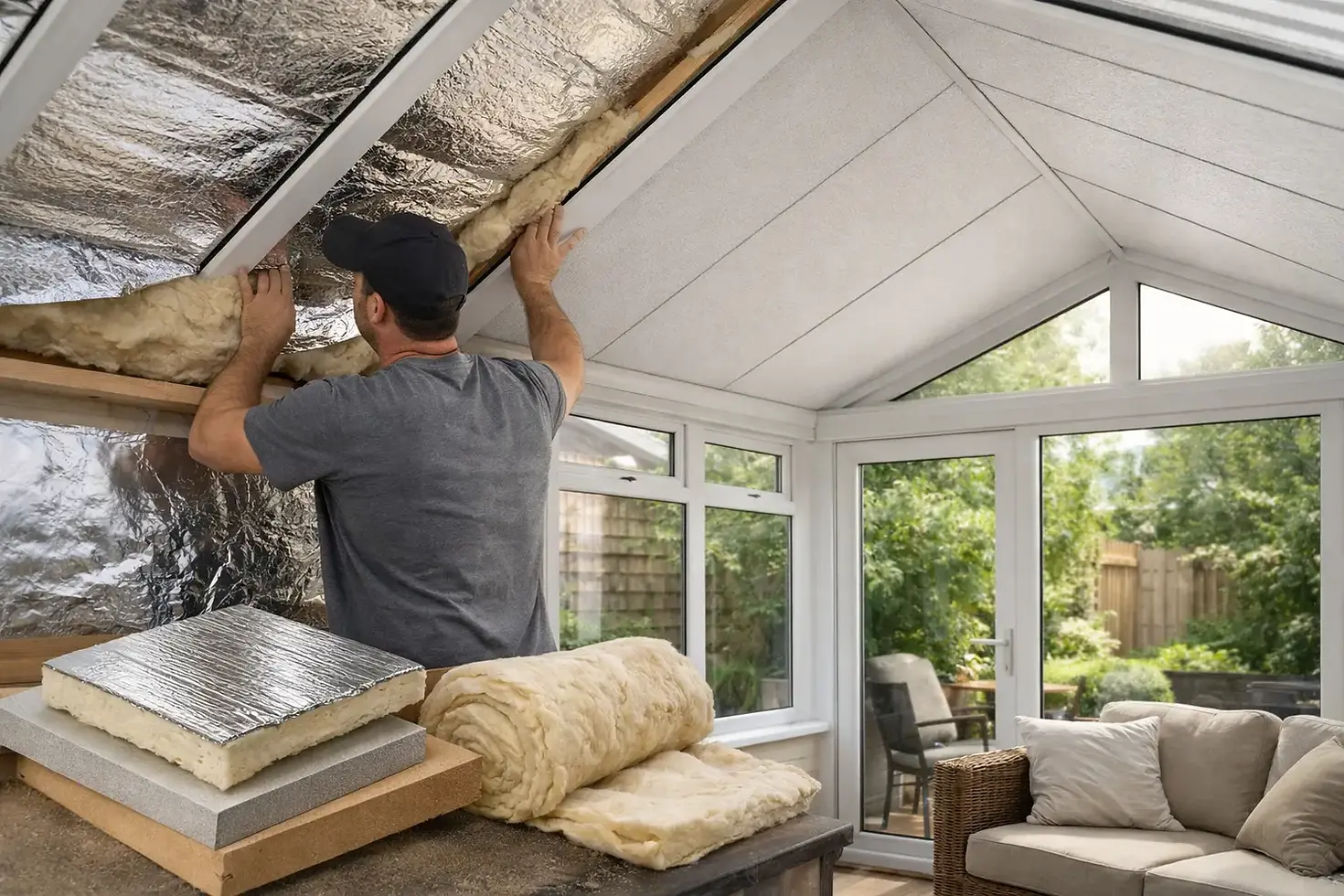
Best Conservatory Roof Insulation Options

A conservatory that is too cold to use in January and too hot to sit in during July is usually losing most of its comfort through the roof. Finding the best conservatory roof insulation is not simply about adding the thickest material possible. The right solution must suit the existing structure, manage condensation properly and give you a room that feels like a genuine part of the home.
For homeowners across Greater Manchester, a roof upgrade can turn an underused conservatory into a brighter, more comfortable space for much more of the year. The most suitable option depends on whether you have a polycarbonate, glass or solid roof, how the conservatory was originally built and what you want from the finished room.
Why conservatory roof insulation makes such a difference
Heat naturally rises, and a poorly insulated conservatory roof lets it escape quickly in winter. In summer, direct sunshine can pass through older polycarbonate panels and make the room uncomfortable within a short time. Insulation helps slow both processes, reducing heat loss in cold weather and limiting solar gain when the sun is out.
There are other benefits too. A well-planned roof upgrade can soften the sound of rain, reduce glare and improve the overall appearance of the room. It may also reduce the need to keep turning up the heating when the conservatory doors are open to the main house.
That said, insulation cannot correct every issue on its own. If frames are draughty, glazing units have failed or the base has poor insulation, those areas should be considered as part of the wider improvement plan. Honest advice starts with identifying where the room is actually losing heat.
The best conservatory roof insulation depends on your roof
There is no single product that suits every conservatory. The best approach balances thermal performance, budget, headroom, daylight and the strength of the existing framework.
Internal roof insulation
Internal insulation is fitted underneath an existing glass or polycarbonate roof. It normally combines insulated boards with a plastered or panelled internal finish, creating a more traditional ceiling inside the conservatory.
This can be a practical choice where the current roof is weatherproof and structurally sound. It is generally less disruptive than a full replacement and can make a noticeable difference to comfort. It also gives the room a smarter, more finished appearance.
The trade-off is that it reduces internal headroom and does not address the exterior condition of an ageing roof. Covering the underside of a roof without proper ventilation and vapour control can also create a condensation risk. This is why the specification and installation details matter as much as the insulation itself.
External insulation over an existing roof
External insulation is installed above the existing roof structure, then protected with a new weatherproof covering. Because the insulation sits on the outside, it can help retain more internal headroom and limit thermal bridging through the original roof framework.
It can be an effective option in the right circumstances, particularly where the existing roof has a suitable pitch and construction. However, it changes the roof build-up and adds weight. The frames, foundations and supporting structure need to be assessed before work begins.
External systems can also alter the look of the conservatory significantly. For some properties that is a benefit, while others may prefer to retain the lighter appearance of a glazed roof.
A tiled or solid replacement conservatory roof
For many homeowners, a lightweight tiled roof is the strongest long-term answer when an old conservatory roof is the main source of discomfort. These systems replace the roof rather than insulating over it, using a purpose-designed lightweight structure, insulation and an internal ceiling finish.
A solid replacement roof can provide excellent thermal performance, improve sound insulation and give the space a more room-like feel. It is particularly popular for conservatories that homeowners want to use as dining rooms, playrooms, home offices or everyday living space.
The main consideration is light. A fully solid roof will admit less daylight than glass or polycarbonate. Roof windows or glazed panels can be included in many designs to bring natural light back into the room, but the ideal layout should be discussed at survey stage rather than treated as an afterthought.
High-performance glass roof replacement
Replacing a dated polycarbonate roof with modern performance glass can be the best choice for homeowners who value natural light and views of the garden. Modern glazing can offer far better solar control and heat retention than older roof panels, while still preserving the open character of a conservatory.
Glass roofs are not always as insulating as a well-specified tiled roof, but the difference in comfort compared with older systems can still be substantial. They are often a very good middle ground for people who want better year-round usability without turning the space into a conventional extension.
What to look for beyond the insulation material
It is tempting to compare upgrades only by the thickness of the insulation. In practice, the complete roof build-up is what determines performance. Gaps around the perimeter, poorly sealed joints and cold bridges through structural components can all undermine a good material choice.
A professional survey should consider the roof’s condition, pitch, frame strength, drainage and the connection between the conservatory and the house. The installer should also check whether windows and doors are still performing as they should. There is little value in creating an insulated ceiling if cold air is still coming through failed sealed units or worn door seals.
Ventilation deserves equal attention. Conservatories can experience high humidity from drying clothes, plants, cooking nearby and everyday family life. A roof system needs the right vapour control layers and ventilation provisions to prevent moisture becoming trapped where it cannot be seen.
Building regulations and structural checks
Changing a conservatory roof can affect whether the structure remains exempt from Building Regulations. A replacement solid roof, in particular, may require checks on structural loading and thermal performance. Requirements can vary according to the design and whether the conservatory remains separated from the main home by external-quality doors.
This should not put homeowners off improving their conservatory. It simply means the project needs to be planned properly. A reputable installer will explain the proposed system, assess whether the existing base and frames are suitable, and be clear about any approvals or certification that may be needed. Transparent pricing should include the work required to complete the job correctly, with no hidden costs added later.
Which option offers the best value?
The lowest initial price is not always the best value. Internal insulation may cost less than a replacement roof, but it can be a false economy if the existing roof is nearing the end of its life or has recurring leaks. Equally, a tiled roof may be more investment than necessary for a conservatory that is mainly used in spring and autumn.
Think about how you want to use the space over the next five to ten years. If you need a quiet office that stays comfortable through a Manchester winter, a fully insulated replacement roof could make sense. If your priority is retaining a bright garden room while reducing extremes of temperature, modern solar-control glass may be the better fit.
The quality of installation should also carry real weight in the decision. A carefully measured, properly sealed roof with suitable insulation will perform better and last longer than a rushed fit using supposedly superior materials.
A practical way to choose your upgrade
Start with the condition of the roof you have. Cracked polycarbonate, leaking seals, sagging bars or persistent condensation usually point towards replacement rather than insulation alone. If the roof remains in good order, an internal solution may be worth exploring.
Next, decide what matters most: maximum warmth, a brighter room, more headroom, reduced rain noise or a particular exterior finish. There will usually be a compromise. A tailored quotation should set out those choices clearly, rather than pushing one roof type for every property.
At Whitefield Windows, the focus is on assessing the existing conservatory and recommending a practical upgrade that suits the home, the budget and the way the room will be used. A considered roof improvement can make your conservatory somewhere you choose to spend time, not a room you close off when the weather changes.


Comments